
Did you know you should be losing weight while you sleep? Your body was designed to do this naturally, but if you’re gaining weight despite eating well and exercising, there’s a reason why this is happening to you—and you’re about to find out what it is.
Calculate your BMR in our metabolism rate calculator right below, then keep scrolling to discover what might be hijacking your weight loss—even with perfect diet and exercise.
The calculator is just below—enter your info to see results.
Metabolism Calculator
Discover your metabolic age and daily calorie needs
Now let's unpack what they mean, and why your results might be way off from reality.
Quick note: I'm sharing science-backed info that's helped thousands understand their metabolism, but remember—every body is different. If you have health concerns, definitely chat with your doctor.
The Hidden Reason Your Body Stores Fat While You Sleep
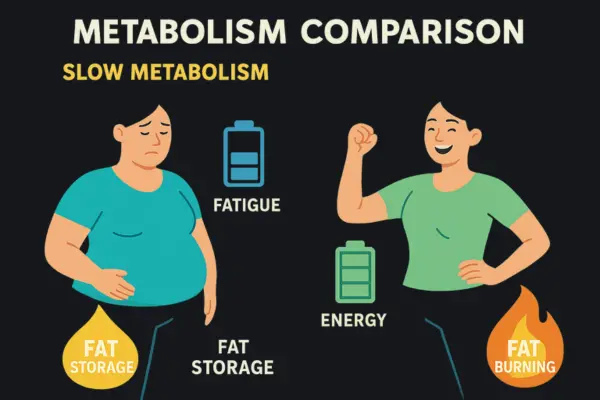
Here's what drives me crazy about most weight loss advice.
Everyone's obsessed with calories in, calories out. Eat less, move more. Simple math, right?
Wrong.
If it was that simple, why are you still struggling to lose weight eating 1,200 calories and hitting the gym five times a week?
The truth is, your BMR number from that calculator? It assumes your body is functioning like a well-oiled machine.
But what if your metabolic engine is running on three cylinders instead of eight?
Think of your metabolism like a car. When everything's working properly, you burn fuel efficiently and cruise down the highway. But when something's broken under the hood, you're lucky to make it around the block—no matter how much gas you put in.
Your body's "engine" has been hijacked by modern life, and it's storing energy instead of burning it.
What if I told you the real problem isn't your willpower or your workout routine—it's that your body's fat-burning switch got turned off somewhere along the way? One person discovered exactly how to flip that switch back on after trying everything else for two years.
How Modern Life Hijacks Your ATP Production
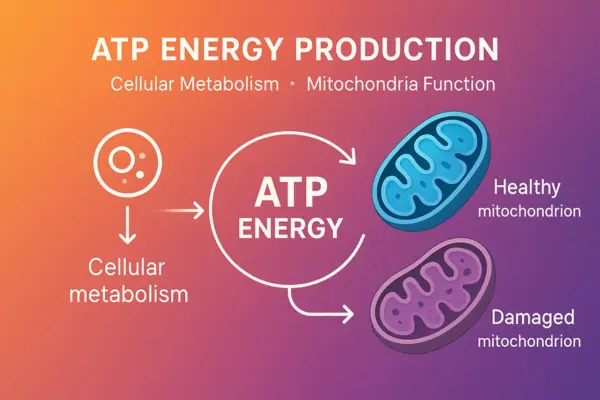
Let's talk about what's really happening inside your cells.
Every cell in your body has tiny power plants called mitochondria. These little guys take the food you eat and turn it into ATP—basically, cellular fuel.
Think of ATP like the battery charge on your phone. When it's full, everything runs smoothly. When it's low, everything slows down.
Here's the problem: after age 35, you lose about 10% of your mitochondria per decade. That's like losing 10% of your phone's battery capacity every year.
But it gets worse.
Modern life—processed foods, chronic stress, environmental toxins—damages the mitochondria you have left. Your cellular power plants start working overtime just to keep you alive, with nothing left over for burning fat.
The result? Your BMR calculator says you should burn 1,500 calories lying in bed, but your actual burn might be closer to 1,200. That 300-calorie difference? That's 31 pounds of fat storage per year.
Signs your ATP production is tanked:
- Afternoon energy crashes (especially around 3 PM)
- Waking up tired even after 8 hours of sleep
- Brain fog that coffee can't fix
- Feeling cold all the time (especially hands and feet)
- Stubborn belly fat that won't budge
Important Note: If you're experiencing extreme fatigue or multiple symptoms, it's worth talking to your healthcare provider about metabolic testing.
But here's the thing most doctors won't tell you: your liver is the command center for all of this.
When your liver gets overwhelmed (hello, modern diet), it can't process fats efficiently, your hormones go haywire, and your metabolism basically hits the brakes.
Ready to learn how supporting your liver function can completely transform your energy and weight loss? This detailed 90-day journey shows exactly what happened when someone finally addressed the root cause instead of just the symptoms.
The Fast Food Metabolism Trap (And How to Escape It)
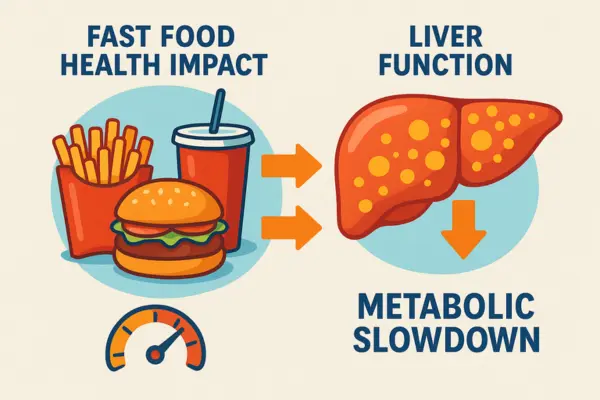
Let's talk about what that drive-thru lunch is really doing to your metabolism.
Fast food isn't just high in calories—it's metabolic poison.
Processed foods are loaded with chemicals your liver has never encountered in human history. Preservatives, artificial flavors, trans fats, high fructose corn syrup. Your liver works overtime trying to process this stuff, and it literally doesn't know what to do with half of it.
According to research from the National Institute of Diabetes and Digestive and Kidney Diseases, regular consumption of processed foods can reduce liver function by up to 25% within just six months.
When your liver is overwhelmed:
- It can't convert stored fat back into energy
- Hormone production gets messed up (especially thyroid and insulin)
- Toxins build up in your fat cells
- Your body goes into "storage mode" to protect itself
It's like trying to run a marathon while carrying a 50-pound backpack. Technically possible, but you're going to be slow, tired, and ready to quit.
The worst part? This damage compounds over time. Each processed meal makes the next one harder for your liver to handle.
What if there was a way to give your liver the support it needs to break free from this cycle? See how one person's approach to liver optimization led to effortless weight loss and energy they hadn't felt in decades.
Why Excessive Cardio Sabotages Weight Loss
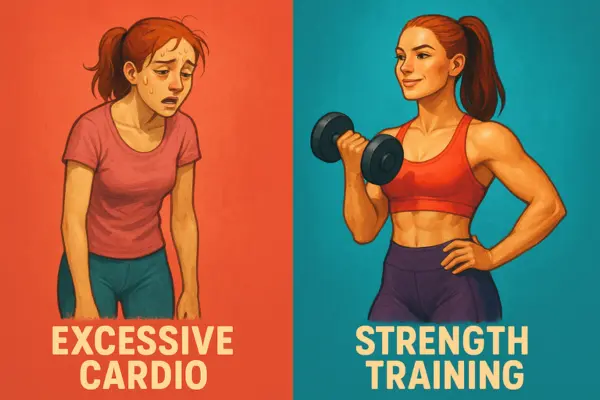
I'm about to save you hours of wasted time at the gym.
That hour on the treadmill every day? It might be making you fatter.
Here's what nobody tells you about cardio: excessive cardio breaks down muscle tissue. And muscle tissue is what burns calories 24/7—even while you sleep.
Think about it this way: would you rather have a car that gets 40 mpg or 20 mpg? Muscle is your high-efficiency engine. Fat is just dead weight.
When you do too much cardio:
- Your body starts breaking down muscle for fuel
- Your BMR drops because you have less metabolic tissue
- You might lose weight on the scale, but you're just becoming "skinny fat"
- Your body gets more efficient at storing the calories you do eat
The solution? Strength training 3 times per week, and light cardio 1-2 times per week—max.
Strength training builds muscle. More muscle means higher BMR. Higher BMR means you burn more calories doing absolutely nothing.
But here's the catch: to build muscle efficiently, your hormones need to be balanced. Your liver needs to be functioning properly. Your cellular energy production needs to be optimized.
Otherwise, you're just going through the motions without seeing results.
Note: If you're new to strength training, start with bodyweight exercises or light weights. Consider working with a trainer for proper form.
Tired of working out hard but seeing minimal results? Discover how optimizing your metabolism made workouts finally pay off—and why the order matters more than you think.
The Real Solution: Fixing Your Metabolic Engine
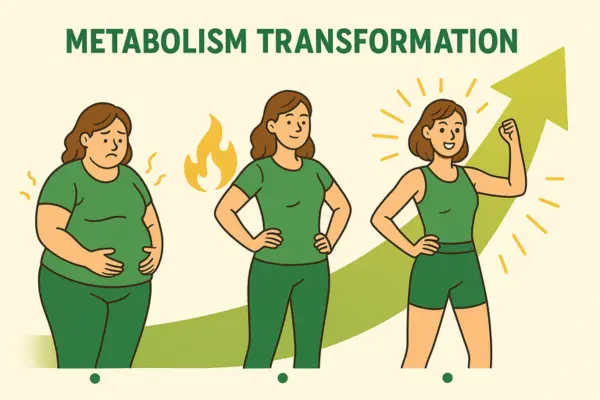
Here's the truth most fitness gurus won't tell you:
You can't out-exercise a broken metabolism.
You can eat 1,200 calories and run 5 miles every day, but if your liver is overwhelmed and your cellular energy production is tanked, you'll just be tired and hungry.
The real solution isn't harder workouts or stricter diets. It's fixing your metabolic engine from the inside out.
This means:
- Supporting liver function so it can process fats efficiently
- Optimizing cellular energy production so your mitochondria work like they're supposed to
- Balancing hormones so your body knows it's safe to burn stored fat
- Reducing inflammation that slows down every metabolic process
When your metabolic engine is running properly, weight loss becomes effortless. Your BMR calculator number becomes accurate again. You have energy that lasts all day.
You stop fighting your body and start working with it.
What would it feel like to wake up with natural energy, see the scale move in the right direction, and actually trust your body again? This 90-day transformation story shows exactly how someone went from metabolic breakdown to metabolic breakthrough—and the specific approach that made all the difference.
Frequently Asked Questions
How accurate is my BMR calculator result?
For people with healthy metabolism, BMR calculators are usually within 10-15% of actual needs. But if your metabolism is compromised (which is common after 35), your real burn could be 20-30% lower than the calculator suggests.
That's why the scale won't budge even when you're eating "the right amount" of calories.
Why am I gaining weight when I eat less than my BMR?
This is a huge red flag that your metabolism is damaged. When you eat below your BMR for extended periods, your body goes into survival mode and actually slows down your metabolic rate even further.
It's like your body thinks there's a famine, so it holds onto every calorie for dear life.
Can I really lose weight while sleeping?
Absolutely! Your BMR represents calories burned at complete rest. A healthy metabolism burns 60-70% of your daily calories just keeping you alive.
The problem is, most people's "sleep burn" is way lower than it should be due to metabolic dysfunction.
How long does it take to fix a damaged metabolism?
With the right approach, most people start feeling more energy within 2-3 weeks. Visible weight loss usually begins around week 4-6. Full metabolic restoration can take 3-6 months, but the improvements happen gradually along the way.
What's the difference between BMR and metabolism?
BMR is just one component of your total metabolism. It's the calories you burn at rest. Total Daily Energy Expenditure (TDEE) includes BMR plus calories from movement, digestion, and daily activities.
When people say they have a "slow metabolism," they usually mean their BMR is lower than expected.
Should I eat below my BMR to lose weight faster?
Never eat below your BMR for extended periods. This is a recipe for metabolic damage, muscle loss, hormone disruption, and rebound weight gain.
Instead, focus on optimizing your metabolism so your BMR increases naturally.
Medical Disclaimer: Extreme calorie restriction can cause serious health issues. If you're experiencing symptoms like hair loss, missed periods, extreme fatigue, or mood changes, please see your healthcare provider immediately.
Your BMR calculator gave you a number, but now you understand why that number might not match your reality.
The good news? Your metabolism isn't permanently broken. With the right approach, you can restore your body's natural fat-burning ability and finally see the results you've been working so hard for.
Remember: the goal isn't to fight your body into submission. It's to give your body what it needs to function the way it's supposed to.
Ready to stop guessing and start seeing real results? Discover the complete approach that helped someone transform their metabolism and lose 28 pounds in 90 days—without cutting calories or doing excessive cardio.